The 8am rush is one queue and one receptionist
Vandial answers every caller in that queue at the same time, books and moves appointments in your real calendar, takes registrations and repeat-prescription requests — and hands anything clinical straight to a person, because deciding how urgent a symptom is was never an answering service's job.

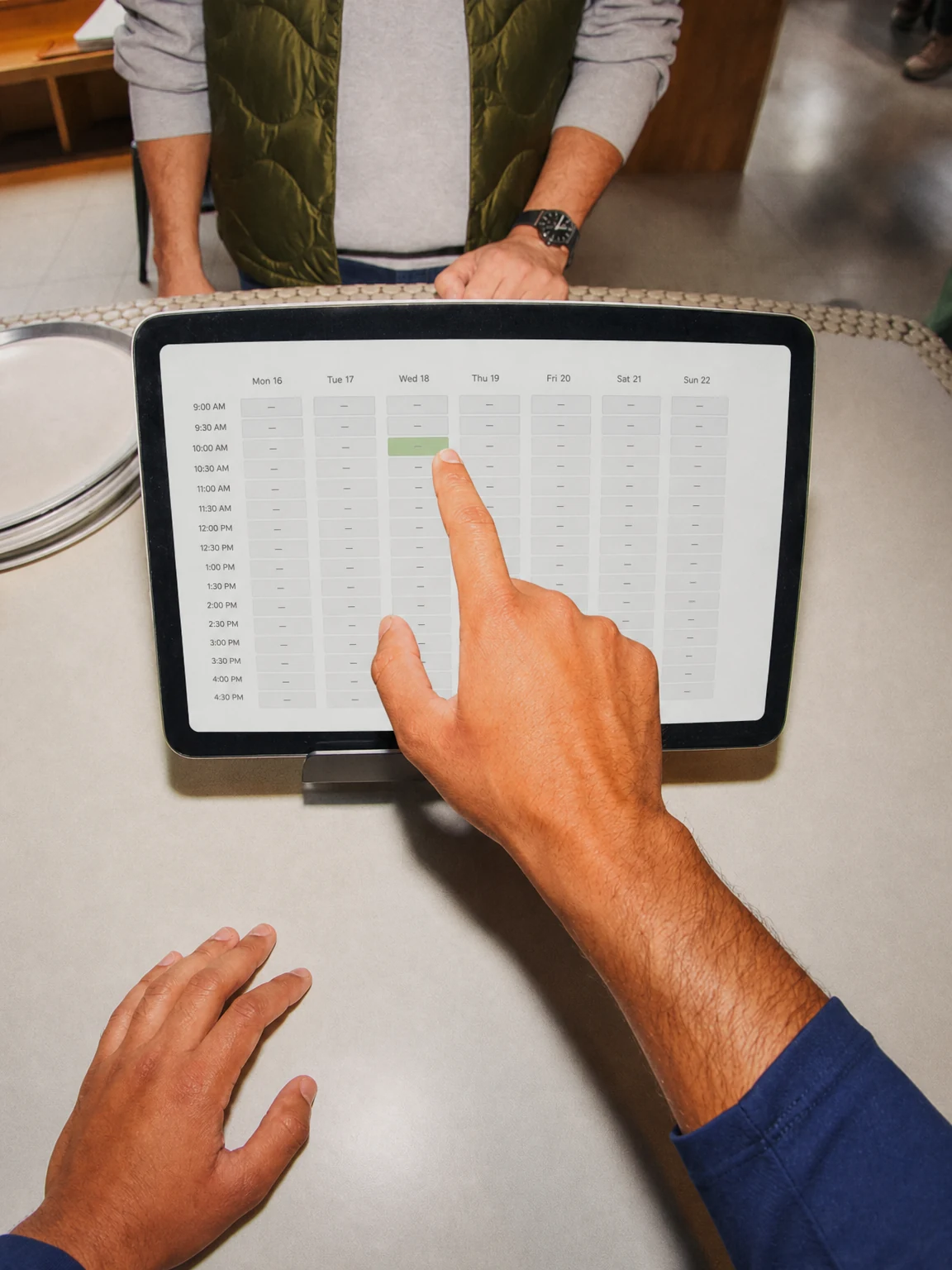

Medical office answering service — booking, not triage

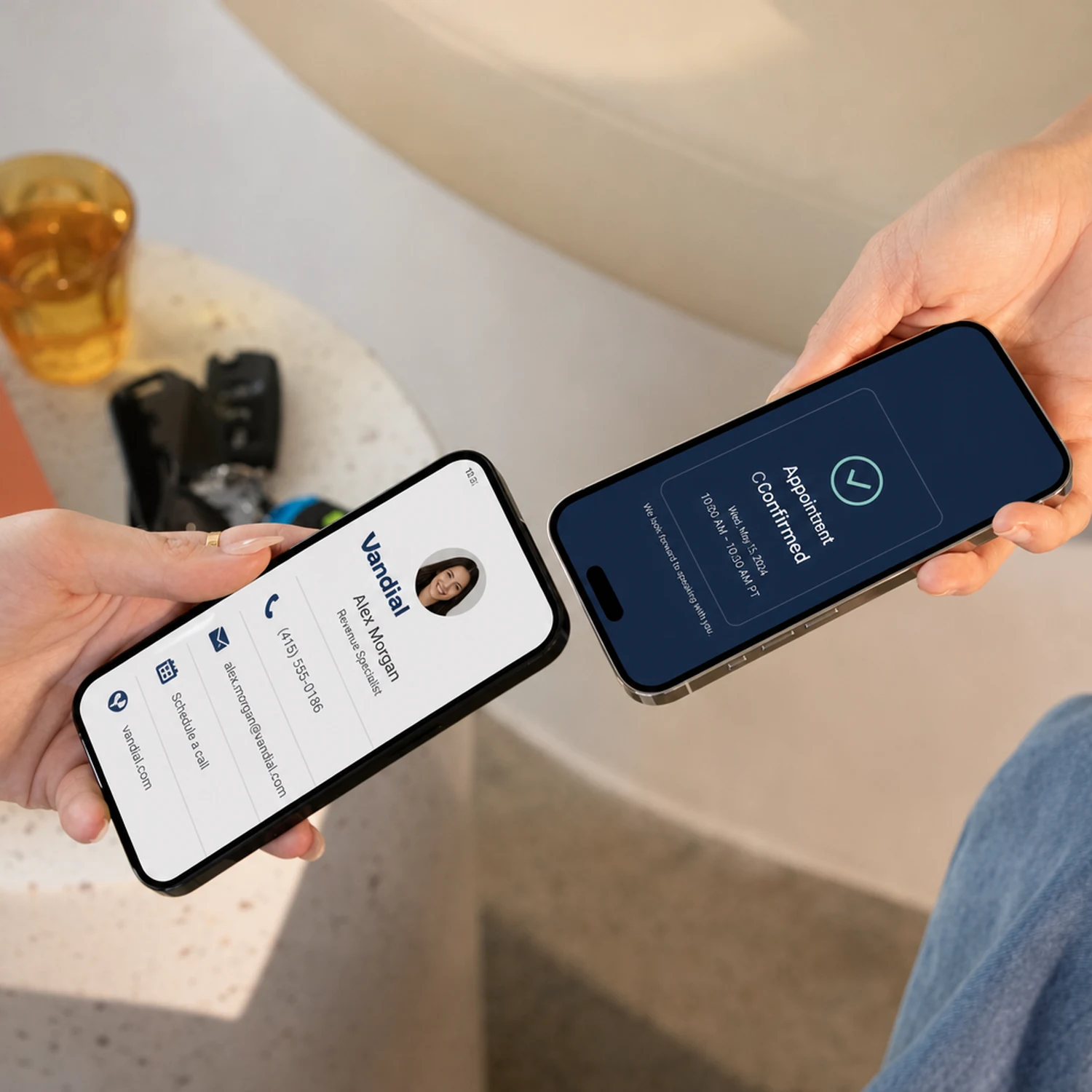

One medical practice call, and what it left behind
- 8am
- is when a whole day's calls arrive, against one phone line
- No hold music
- every caller is answered at once, however many ring in the same minute
- No triage
- urgency is a clinician's call, and it stays one
Answered on the second ring. Every field below was captured during the call — nobody typed it in afterwards.
“I've just moved here and I need to register with someone.”
Classified0:15
- new patient
- registration
Captured0:35
- records request signed
- form to send
Booked1:03
- Thu 9:40
- new patient
- form sent
Booked — new patient registration Thu 9:40
Read the whole medical practice call, line by line
- 0:02Amara Fitzgerald: I've just moved here and I need to register with someone.
- 0:05Vandial: We're taking new patients. Are you registering just yourself, or family as well?
- 0:13Amara Fitzgerald: Just me for now.
- 0:15Classified — new patient · registration
- 0:21Vandial: I'll text you the registration form to fill in before you come. Have you requested your records from your old practice?
- 0:32Amara Fitzgerald: I signed something last week, yes.
- 0:35Captured — records request signed · form to send
- 0:44Vandial: Thursday at 9:40 for the new-patient appointment — that one runs twenty minutes rather than ten.
- 0:58Vandial: Booked. The form's on its way by text now.
- 1:03Booked — Thu 9:40 · new patient · form sent
Answered, understood, booked
One number, picked up on the second ring — at 2am, on a Sunday, while you're already working. By the time the caller hangs up, it is in your calendar.
Get in touchSee the call recordIt answers
The whole 8am queue answered at once, rather than one at a time with everyone else on hold listening to a recording.
- 0:00Incoming call
- 0:02Answered by Vandial2 rings
- 0:05“Hello, Marlow Plumbing.”
It understands
Registration, routine, follow-up or prescription — sorted, and booked at the right length with the right clinician.
- Job
- Water heater — leaking
- Where
- 14 Marlow Street
- Access
- Side gate, dog in yard
- Urgency
- Today if possible
- Still on
It books
Confirmed by text with the forms attached, and anything clinical handed to a person rather than assessed.
Text to Dave · 13:01
You’re booked for today, 1–2pm. Reply R to move it.
It asks what you would ask
These are the questions the agent runs for medical practices, and the operational reason each one exists. Change them, add your own, or take them out — they are configuration, not code.
Are you an existing patient or registering with us?
Registration is a longer appointment with paperwork attached. Booking it as a routine slot costs the practice ten minutes and the patient a second visit.
What kind of appointment do you need?
Routine, follow-up, review, vaccination and phone consultation are different lengths with different clinicians.
Is this about something we've already seen you for?
Continuity — a follow-up should go back to the same clinician, and rebooking it with a stranger wastes the appointment.
Do you need an interpreter, or step-free access?
Asked routinely rather than discovered on arrival, when it is too late to arrange either.
Is this a repeat prescription request?
A large share of a practice's inbound volume, none of it needing a receptionist, all of it currently occupying one.
Would an earlier appointment help if one comes free?
Cancellations are the practice's spare capacity, and nobody has time to ring round the list.
More than a medical office answering service
An answering service takes a message and charges you for it. Vandial knows your prices, your patch and your diary — so it books the job, or puts a real emergency straight through to you.
Get in touchSee what it costsIt picks up out of hours, and while your line is busy
The morning rush is the whole problem: a day's calls arriving in twenty minutes against one phone line. Answering in parallel removes the queue entirely, and with it the patients who give up and turn into the same call tomorrow.
It knows your prices, your patch and your hours
Repeat prescriptions, appointment moves, registration questions and “what time was I booked for” are most of the volume and none of the clinical work. Taken off the front desk entirely, they give reception its morning back.
What it knows
New registration
20 minute appointment
Routine
10 minutes
Phone consults
Daily, 2-4pm
Repeat prescriptions
48 hours
What matters reaches you. The rest waits
It reads your real calendar and books the right length with the right clinician, including the longer slots registrations and reviews need. A wrongly booked appointment costs more than the call it saved.
Your rule: if they say gas, flood or no heat — ring Sam, then me.
Every call written up, tagged and searchable
Every call summarised and recorded, so what a patient was told — including being told to ring 911 — is a matter of record rather than of recollection.
Dave Whitfield · Sunday, 4m 12s
Water heater, leaking
Leaking from the base. Booked for Tuesday 1–2pm. Side gate open, dog in the yard. Asked whether the service call fee applies — told $99, waived on repair.
Eight o'clock, every morning
A practice's call volume is not spread across a day; it is a spike at opening, when everybody who has been waiting since yesterday afternoon rings at once. One receptionist and one queue means a twenty-minute hold and an abandonment rate nobody measures. Vandial answers all of them in parallel, so the caller at 8:01 and the caller at 8:14 get the same pickup.
When it happens · 8am, every weekday
Get in touchSee what it costsA normal month, then a surge month
- Billed per minute
- Your baselineTriples with the calls
- The bill peaks in the same week your phone does.
- Billed per call, like a human service
- Per call, every callEvery extra call, billed
- Including the robocalls and the wrong numbers.
- Vandial
- From $99 a monthThe same
- Call flows are unlimited on every paid rung, and there is no per-minute billing. The rungs differ only in how many unique customers you answer for — and a surge is mostly more calls from the same people.
Robocalls and sales calls are identified and zero-rated on every plan. They never count toward your included customers and never create a customer record.
What it will never do
You are handing your phone to something that talks to your customers when you are not there. These are the lines it does not cross in medical practice, and the words it uses instead.
It does not triage. At all
It will not assess how urgent a symptom is, will not suggest what might be wrong, and will not tell a caller whether they need to be seen today. Clinical triage is a clinician's decision and it stays one — the agent books, or it hands the call to a person.
What it actually says
“I'm not able to judge that, and I wouldn't want to get it wrong. Let me put you through to the duty clinician rather than book you an appointment.”
Emergencies get 911, not an appointment
Chest pain, difficulty breathing, stroke symptoms, severe bleeding, or a caller describing a crisis — the agent tells them to ring emergency services immediately and does not attempt to book, reassure or assess. It alerts the practice at the same time.
What it actually says
“Please hang up and ring 911 right now — that needs an ambulance, not an appointment. I'm alerting the practice as well.”
It asks for the minimum a booking needs
Name, contact details, appointment type, and whether it is a follow-up. It does not ask a caller to describe symptoms, does not record clinical detail volunteered in passing beyond a note that the clinician should ring, and does not read anything back on a call it did not need in the first place.
What it actually says
“You don't have to go into the details with me — I'll book you in and the doctor will take it from there.”
The job lands where you already work
Google, Outlook, Apple, Exchange, CalDAV — whichever calendar you already keep. Then your payments, your CRM, and whatever you automate with.
Get in touchSee what it costs…and a lot more besides
- Warm transfersWarm transfersAnnounced — who is calling and why, before you take the line.
- Spam never billedSpam never billedRobocalls are spotted, zero-rated, and never become a customer.
- A number per sourceA number per sourceVan, yard sign, Google listing — see which line brings the work.
- Team & on-callTeam & on-callTries you, then a second number, then whoever is on call.
- Run it by textRun it by textReply to a text to move a job, block a morning, clear a day.
- Clear a day, everyone toldClear a day, everyone toldCall off a wet Tuesday; every customer is told and re-offered.
- Never invents an answerNever invents an answerNo price or slot it was not given. It takes a message instead.
- Any trade, no codeAny trade, no codeGoal, questions and guardrails are settings, not a rebuild.
What medical practices say before they say yes
Three objections, in the words they are usually put in. Where the objection is right, it says so.
“Triage is a clinical decision. Software must not do it.”
Agreed, completely, and it does not. It will not assess urgency, suggest what might be wrong, or decide whether someone needs to be seen today. It books appointments; anything clinical goes to the duty clinician, and anything that sounds like an emergency goes to 911.
“The 8am rush is the problem and nothing fixes it.”
One receptionist against a day's calls in twenty minutes is not a staffing problem, it is a queue problem — and a queue is what disappears when calls are answered in parallel. The patient who gave up at 8:14 and rang again tomorrow stops being a category.
“Most of our calls aren't appointments at all.”
Repeat prescriptions, appointment moves, registration questions and “what time was I booked for” — most of the volume, none of the clinical work, all of it currently on your front desk. Taken off it entirely.
Already decided you want AI to answer it?
Then the question is which one, and that is a different page: what a generic AI receptionist gets wrong on a medical practice call, and what is configurable about this one.
AI medical receptionistNot your trade?
The agent's questions, urgency rules, escalations and vocabulary are all configuration. Nothing about a trade is hard-coded, which is why there are 31 of these and not one.
HVACPlumbingElectricalRoofingGarage doorPest controlLandscapingCleaningFuel deliveryAuto repairDealership serviceTowingAppliance repairLocksmithMovingRemodelingDentalChiropracticVeterinarySalon & spaLaw firmReal estateProperty managementFuneral homesInsurance agenciesRestaurantsAccountingTherapy practicesHome health careHotelsTools for the next step in your business
Qualify the inquiry
Capture the service, service details and timing. Use your booking rules to decide the next step and when a person should help.
Keep the booking moving
Offer times from your connected calendar, handle rescheduling and send confirmation so interested clients leave with a clear next step.
Welcome the next visit
Follow up with past inquiries and returning clients. Keep the context from the previous conversation and make the next visit easier to arrange.
Explore the questions behind better bookings






Discover what Vandial can do for you
See how an AI agent can help your business qualify inquiries and book the next step.
FAQ
Does it triage?
No. That is the single clearest line on this page. It does not assess urgency, suggest what might be wrong, or decide whether someone needs to be seen today. It books appointments, and anything clinical goes to a person — the duty clinician, or emergency services where the description warrants it.
What does it do in a genuine emergency?
Chest pain, breathing difficulty, stroke symptoms or severe bleeding and it tells the caller to hang up and ring emergency services immediately, then alerts the practice. It does not book, assess or reassure.
Can it handle the 8am rush?
It answers every caller in parallel, so there is no queue and no hold music. That spike — a day's calls in twenty minutes against one receptionist — is the specific failure this is worth buying for in a practice.
What about repeat prescriptions?
Requests are taken, recorded against the patient and routed to whoever processes them, with a confirmation to the caller. It is a large share of inbound volume that never needed a person, and it currently occupies one all morning.
What patient information does it hold?
What a booking requires: name, contact details, appointment type and whether it is a follow-up. It does not ask callers to describe symptoms. We make no compliance certification claims here — what we can state precisely is what it asks for, what it declines to record, and who can see it.
Can it manage cancellations and the waiting list?
Yes. It asks whether an earlier appointment would help, and works that list by text when a slot frees up — capacity that most practices lose simply because nobody has time to ring round.
What does it cost?
Vandial’s paid plans start with Standard at $150 a month for 1,000 AI conversations, Pro at $350 for 2,000, and custom Enterprise plans. Contact us to discuss your workflow and setup; free trials and self-service testing are not available. Standard includes one AI channel, Pro three and Enterprise five. Additional AI conversations cost $0.40 each on paid plans. Voice minutes, phone numbers, paid messaging and implementation are quoted separately. See the pricing page for the conversation definition and plan details.
“Triage is a clinical decision. Software must not do it.”
Agreed, completely, and it does not. It will not assess urgency, suggest what might be wrong, or decide whether someone needs to be seen today. It books appointments; anything clinical goes to the duty clinician, and anything that sounds like an emergency goes to 911.
“The 8am rush is the problem and nothing fixes it.”
One receptionist against a day's calls in twenty minutes is not a staffing problem, it is a queue problem — and a queue is what disappears when calls are answered in parallel. The patient who gave up at 8:14 and rang again tomorrow stops being a category.
“Most of our calls aren't appointments at all.”
Repeat prescriptions, appointment moves, registration questions and “what time was I booked for” — most of the volume, none of the clinical work, all of it currently on your front desk. Taken off it entirely.