Nobody locked out of their house calls twice
This is the trade where a missed call is a lost job with no second chance — the caller is standing outside in the cold with a phone and a list. Vandial answers on the first ring at any hour, verifies the address and the ID, asks whether anyone is locked inside, and dispatches.
From $99 a month · Robocalls are never billed
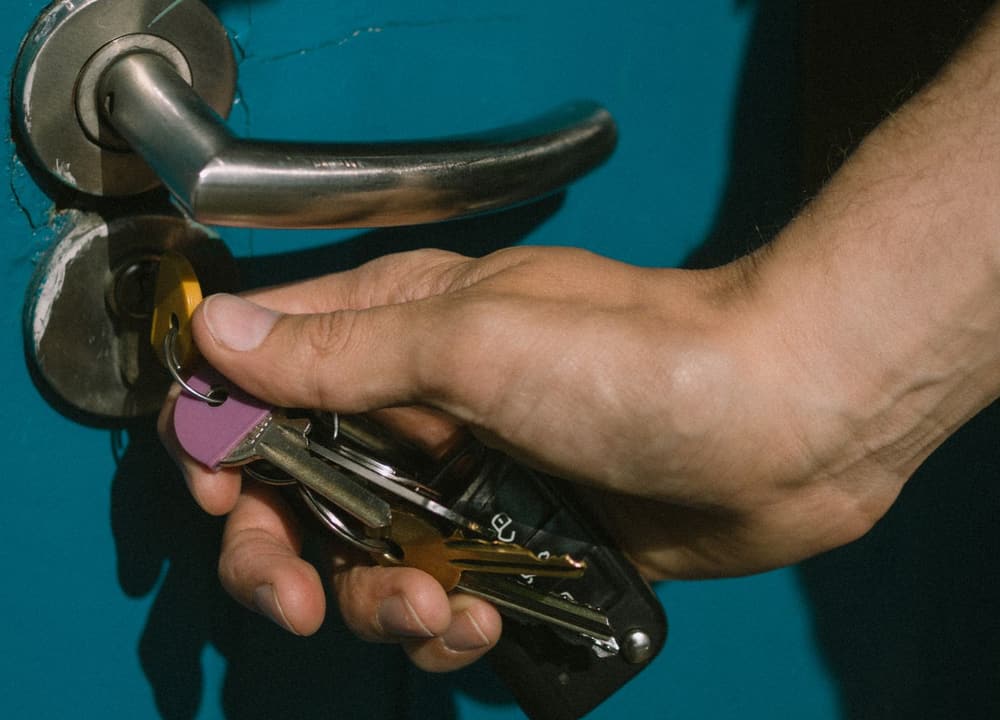
 Incoming callTom Ashby
“I've pulled the door shut with my keys on the table.”
Dispatched — ETA 25 min, ID verification flagged
- First to answer
- takes the lockout. Nobody rings back a number that rang out
- 11pm-4am
- when the weekend's lockout calls actually arrive
- First ring
- answered at any hour, with no busy signal on a busy Saturday
This is what your callers hear
The same receptionist a locksmith business gets, answering as the trades we already run. Yours is in the middle — press play.
One locksmith call, and what it left behind
Answered on the second ring. Every field below was captured during the call — nobody typed it in afterwards.
“I've pulled the door shut with my keys on the table.”
Classified0:10
- lockout
- residential
- no occupants
Captured0:26
- 63 Prospect Terrace
- Yale latch
- ID required on arrival
Dispatched0:48
- Tom
- ETA 25 min
Dispatched — ETA 25 min, ID verification flagged
Read the whole locksmith call, line by line
- 0:01Tom Ashby: I've pulled the door shut with my keys on the table.
- 0:03Vandial: We'll get you back in. Is anyone inside the house — a child, or a pet?
- 0:08Tom Ashby: No, just me out here.
- 0:10Classified — lockout · residential · no occupants
- 0:15Vandial: What's the address, and is it a Yale latch or a deadlock?
- 0:23Tom Ashby: 63 Prospect Terrace. It's the Yale one, it just clicked shut.
- 0:26Captured — 63 Prospect Terrace · Yale latch · ID required on arrival
- 0:34Vandial: Tom's about twenty-five minutes away. He'll need to see ID matching the address before he opens it.
- 0:43Vandial: You'll get a text with his name and the vehicle. Stay somewhere you can see the door.
- 0:48Dispatched — Tom · ETA 25 min
Answered, understood, booked
One number, picked up on the second ring — at 2am, on a Sunday, while you're already working. By the time the caller hangs up, it is in your calendar.
It answers
One ring, at any hour. In this trade the second ring is where the customer starts dialing the next number.
- 0:00Incoming call
- 0:02Answered by Vandial2 rings
- 0:05“Hello, Marlow Plumbing.”
It understands
Is anyone locked inside, whose door is it, what kind of lock — asked in that order, because the first answer can change everything.
- Job
- Water heater — leaking
- Where
- 14 Marlow Street
- Access
- Side gate, dog in yard
- Urgency
- Today if possible
- Still on
It books
Dispatched with an ETA, the locksmith's name and vehicle texted to the caller, and the ID requirement already stated.
Text to Dave · 13:01
You’re booked for today, 1–2pm. Reply R to move it.
It asks what you would ask
These are the questions the agent runs for locksmiths, and the operational reason each one exists. Change them, add your own, or take them out — they are configuration, not code.
Is a child or a pet locked inside — a house or a vehicle?
This is the escalation, and it is asked first, every time. A child in a car in summer is a 911 call, not a booking.
House, car or business?
Three entirely different jobs, tool sets and prices. It is also the first thing that decides who goes.
What's the address, and can you prove you live there?
The ID check is what separates a locksmith from an accessory, and setting the expectation on the phone avoids the argument on the doorstep.
What kind of lock — latch, deadlock, euro cylinder, uPVC?
Decides whether this is a two-minute slip or a drilled cylinder and a replacement, which is a different price and a different van.
Is the door damaged, or has someone tried to force it?
A break-in is a different job with a different urgency, and it usually needs boarding as well as a lock.
Are you somewhere safe while you wait?
A lone caller outside at 3am is a duty of care, and it changes how the ETA is communicated.
More than a locksmith answering service
An answering service takes a message and charges you for it. Vandial knows your prices, your patch and your diary — so it books the job, or puts a real emergency straight through to you.
It picks up out of hours, and while your line is busy
There is no trade where 24/7 matters more literally. Your customers are outside in the cold with a dying phone battery, and they are not leaving a message — they are dialing the next result. Vandial answers on the first ring at three in the morning.
It knows your prices, your patch and your hours
Tell it your service call fee, your radius, whether you do auto and commercial, and your ID policy. It sets the expectation on the call so your locksmith is not negotiating on a doorstep at 2am.
What it knows
Service call
$89
Service area
8 miles
Night rate
$145
ID policy
Photo ID matching the address
What matters reaches you. The rest waits
A child or a pet locked in a vehicle is redirected to emergency services and escalated to you inside seconds. Everything else is dispatched or booked normally.
Your rule: if they say gas, flood or no heat — ring Sam, then me.
Every call written up, tagged and searchable
Every call recorded, with the address, the lock type and the ID conversation on the tape. In a trade that occasionally attracts a dispute, that record is worth having.
Dave Whitfield · Sunday, 4m 12s
Water heater, leaking
Leaking from the base. Booked for Tuesday 1–2pm. Side gate open, dog in the yard. Asked whether the service call fee applies — told $99, waived on repair.
Friday and Saturday night, every week
This trade's peak is not seasonal, it is weekly and it is nocturnal. The calls arrive between eleven at night and four in the morning, from people who will ring the next number on the list in under a minute if nobody answers. There is no callback in locksmithing — the job is gone by the time you listen to the voicemail. Vandial's whole value here is that it never sleeps and never queues.
When it happens · Friday and Saturday, 11pm to 4am
A normal month, then a surge month
- Billed per minute
- Your baselineTriples with the calls
- The bill peaks in the same week your phone does.
- Billed per call, like a human service
- Per call, every callEvery extra call, billed
- Including the robocalls and the wrong numbers.
- Vandial
- From $99 a monthThe same
- Call flows are unlimited on every paid rung, and there is no per-minute billing. The rungs differ only in how many unique customers you answer for — and a surge is mostly more calls from the same people.
Robocalls and sales calls are identified and zero-rated on every plan. They never count toward your included customers and never create a customer record.
What it will never do
You are handing your phone to something that talks to your customers when you are not there. These are the lines it does not cross in locksmith, and the words it uses instead.
A child or pet locked in a car is a 911 call
The agent does not book it, does not quote it and does not give an ETA first. It tells the caller to ring emergency services immediately, because a locksmith is twenty minutes away and a child in a hot car does not have twenty minutes. Then it alerts you and dispatches anyway.
What it actually says
“Ring 911 right now — don't wait for us. Emergency services can be there faster than we can, and I'm sending someone at the same time.”
ID is set as an expectation on the call, not a surprise
Every lockout is told, on the phone, that the locksmith will need identification matching the address before the door is opened. Saying it up front is what stops the doorstep argument — and it quietly deters the calls that were never legitimate.
What it actually says
“Just so you know before he arrives — he'll need to see ID with this address on it before he can open the door.”
It gives your service call fee, never a lock price
What a lock costs depends on what is fitted, and this is a trade with a public reputation problem built on exactly that gap. The agent states your service call fee plainly and refuses to invent the rest — which is both honest and, in this market, a differentiator.
What it actually says
“The service call is $89. I'm not going to quote you for the lock before he's seen it — you'd only be annoyed if I got it wrong.”
The job lands where you already work
Google, Outlook, Apple, Exchange, CalDAV — whichever calendar you already keep. Then your payments, your CRM, and whatever you automate with.


































…and a lot more besides
- Warm transfersWarm transfersAnnounced — who is calling and why, before you take the line.
- Spam never billedSpam never billedRobocalls are spotted, zero-rated, and never become a customer.
- A number per sourceA number per sourceVan, yard sign, Google listing — see which line brings the work.
- Team & on-callTeam & on-callTries you, then a second number, then whoever is on call.
- Run it by textRun it by textReply to a text to move a job, block a morning, clear a day.
- Clear a day, everyone toldClear a day, everyone toldCall off a wet Tuesday; every customer is told and re-offered.
- Never invents an answerNever invents an answerNo price or slot it was not given. It takes a message instead.
- Any trade, no codeAny trade, no codeGoal, questions and guardrails are settings, not a rebuild.
What locksmiths say before they say yes
Three objections, in the words they are usually put in. Where the objection is right, it says so.
“There's no callback in this trade. A missed call is gone.”
That is precisely the argument. Your customer is outside in the cold with a dying battery and a list of numbers, and they are dialing the next one inside a minute. It answers on the first ring at three in the morning, and it never returns an busy signal on a busy Saturday.
“Half the price complaints in this trade start on the phone.”
Which is why it gives your service call fee and stops. It will not invent a figure for a lock nobody has seen, and it says why out loud — in a market with this trade's reputation, refusing to guess is a selling point rather than a limitation.
“What about people trying to get into a house that isn't theirs?”
The ID requirement is stated on the call, before anyone is dispatched: your locksmith needs identification matching the address before the door opens. Saying it on the phone rather than the doorstep prevents the argument, and quietly discourages the calls that were never legitimate.
Locksmith questions, answered
What locksmiths ask before handing over their phone number — and what a locksmith answering service can and cannot do for you.
What happens if a child or a pet is locked in a car?
The agent tells the caller to ring emergency services immediately, before anything else — a locksmith is twenty minutes away and that is too long. It alerts you at the same time and dispatches anyway. It does not quote, does not give an ETA first, and does not treat it as a booking.
Does it handle the ID check?
It sets the expectation on the call: your locksmith will need identification matching the address before the door is opened. Saying it on the phone rather than on the doorstep is what prevents the argument, and it quietly discourages the calls that were never legitimate in the first place.
Will it quote a price?
It gives your service call fee and stops there. What the lock costs depends on what is actually fitted, and this trade has a public reputation problem built entirely on prices invented over the phone and revised on arrival. Refusing to do that is a selling point, not a limitation.
How fast does it answer?
On the first ring, and in parallel — so a busy Saturday night does not produce an busy signal. That is the entire economics of locksmithing: there is no callback, because the customer has already gone to the next number.
Can it dispatch to whoever is nearest?
It captures the address and routes by your on-call rota and coverage areas. If the first locksmith does not pick up it tries the next, announcing the job before connecting, rather than dropping the caller into voicemail.
Does it cover auto and commercial as well as residential?
Yes, and it asks which within the first fifteen seconds, because they are three different jobs with three different tool sets. Auto callers get asked about the vehicle and whether it is a key or a lockout; commercial callers about access and whether the premises are secure.
What does it cost?
Three paid rungs — Starter, Professional and Business — differing only in how many unique customers you answer for in a month. There is no per-minute billing, which matters here: a busy Saturday night must not produce a bill. Your plan is the most it can cost you. Robocalls are identified and never billed.
Already decided you want AI to answer it?
Then the question is which one, and that is a different page: what a generic AI receptionist gets wrong on a locksmith call, and what is configurable about this one.
Not your trade?
The agent's questions, urgency rules, escalations and vocabulary are all configuration. Nothing about a trade is hard-coded, which is why there are 31 of these and not one.