Every lockout sounds the same until you ask who else is in the car
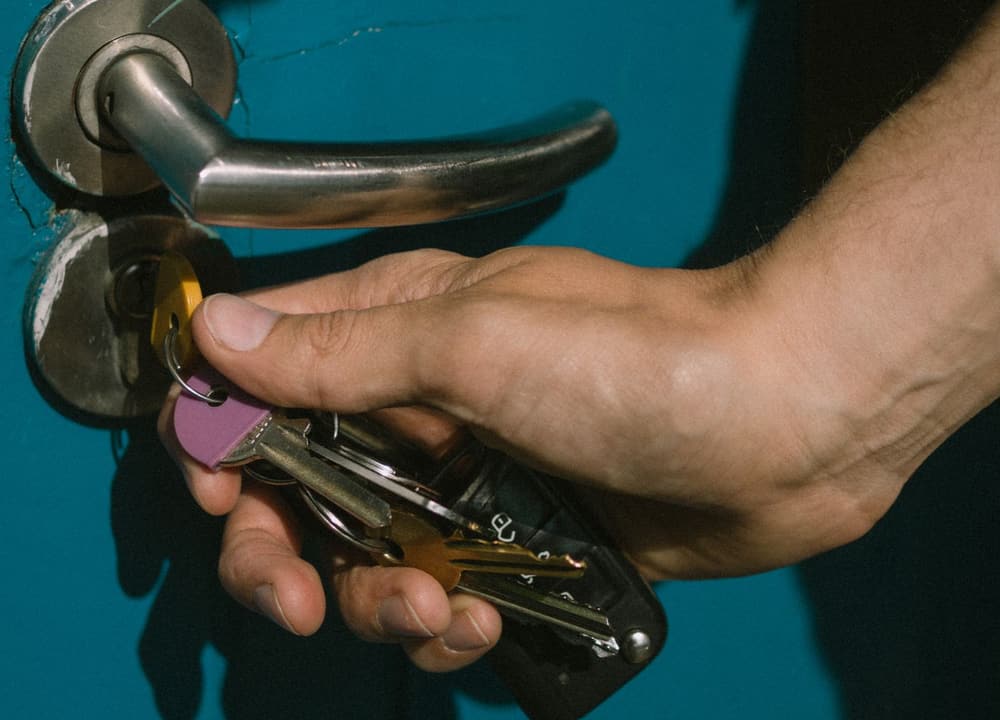
Locksmith calls arrive already stressed, mostly at night, and almost always from somebody standing outside in the cold. The question that changes what happens next is not the address. It is whether there is a child or an animal inside the vehicle, and a general purpose AI receptionist has no reason to ask it.

AI receptionist for locksmiths that asks about the child
The call that separates a locksmith agent from a voice
- Who else is inside
- Asked on every vehicle lockout, before an ETA is offered
- Proof of entitlement
- Established on the call, because a locksmith letting the wrong person in is the risk
- $0
- billed for robocalls and sales calls, on every plan
Every AI receptionist on this results page books appointments and speaks well. This is the locksmith call where that stops being enough.
The caller says
“I've locked my keys in the car in a supermarket car park.”
What a generic AI receptionist does
A generic AI receptionist takes the location, gives an ETA of forty minutes and books it. On a summer afternoon, with a toddler in the back seat that nobody asked about, forty minutes is not a service level. It is a national news story with your company's name in it.
What this one does
Every vehicle lockout is asked whether anyone or any animal is inside, before an ETA exists. If the answer is yes the agent tells the caller to ring emergency services now, alerts you, and does not present itself as the solution. That rule sits on your account and cannot be talked around.
AI receptionist for locksmiths: what is actually configurable
Each of these is something the product does on a real call. Where it refuses to act, the refusal is the design rather than a limitation.
It establishes entitlement before it dispatches
Whose property is it, can they prove it, is it a rental or a tenancy, is there a dispute. Letting the wrong person into a property is the one mistake in this trade that does not have an apology attached, and the questions that prevent it are the same every time, which is exactly what software should be doing.
It knows which jobs need which kit
Euro cylinder or mortice, car make and model and whether it has a transponder key, safe make, uPVC or timber. That is what decides whether the van that is closest is the van that can help.
It gives a call out figure, not an invented total
Your call out charge and your after midnight rate are settings and it states them plainly. The price to open a specific lock is not, because this trade has a reputation problem built entirely out of numbers quoted on the phone and doubled on arrival.
It answers when you are already on a job
Lockouts cluster in the hours you are least reachable and the caller has three other numbers open. Two rings, the questions asked in order, a real ETA from your live calendar, and a text confirming it, while your hands are still inside somebody's door.
What it asks on a locksmith call
Not a name and a preferred time. Each of these has an operational reason behind it, and every one of them is yours to change.
“Is a child or a pet locked inside — a house or a vehicle?”
This is the escalation, and it is asked first, every time. A child in a car in summer is a 911 call, not a booking.
“House, car or business?”
Three entirely different jobs, tool sets and prices. It is also the first thing that decides who goes.
“What's the address, and can you prove you live there?”
The ID check is what separates a locksmith from an accessory, and setting the expectation on the phone avoids the argument on the doorstep.
“What kind of lock — latch, deadlock, euro cylinder, uPVC?”
Decides whether this is a two-minute slip or a drilled cylinder and a replacement, which is a different price and a different van.
“Is the door damaged, or has someone tried to force it?”
A break-in is a different job with a different urgency, and it usually needs boarding as well as a lock.
“Are you somewhere safe while you wait?”
A lone caller outside at 3am is a duty of care, and it changes how the ETA is communicated.
What it will never do on a locksmith call
You are handing your phone to software that talks to your customers when you cannot. These are the lines it does not cross, and the exact words it uses instead.
A child or pet locked in a car is a 911 call
The agent does not book it, does not quote it and does not give an ETA first. It tells the caller to ring emergency services immediately, because a locksmith is twenty minutes away and a child in a hot car does not have twenty minutes. Then it alerts you and dispatches anyway.
What it actually says
“Ring 911 right now — don't wait for us. Emergency services can be there faster than we can, and I'm sending someone at the same time.”
ID is set as an expectation on the call, not a surprise
Every lockout is told, on the phone, that the locksmith will need identification matching the address before the door is opened. Saying it up front is what stops the doorstep argument — and it quietly deters the calls that were never legitimate.
What it actually says
“Just so you know before he arrives — he'll need to see ID with this address on it before he can open the door.”
It gives your service call fee, never a lock price
What a lock costs depends on what is fitted, and this is a trade with a public reputation problem built on exactly that gap. The agent states your service call fee plainly and refuses to invent the rest — which is both honest and, in this market, a differentiator.
What it actually says
“The service call is $89. I'm not going to quote you for the lock before he's seen it — you'd only be annoyed if I got it wrong.”
The four things it answers from
Configuration rather than something a model has been asked to remember. Change one at eight in the evening and the next call uses the new value.
Service call
$89
Service area
8 miles
Night rate
$145
ID policy
Photo ID matching the address
What locksmiths say before they say yes
In the words they are usually put in. Where the objection is right, it says so.
“People in a panic won't talk to a machine.”
People in a panic will talk to anything that answers. What loses this call is the fourth ring and the voicemail beep, because the next locksmith is one tap away in the same search results. It never claims to be a person, and it gets to the useful questions faster than a sympathetic human would.
“Quoting is impossible in this trade.”
Which is why it does not. Call out fee and hourly rate, both of them yours, and an explicit statement that the job is priced when the lock is seen. That is more honest than most of what gets said on locksmith phone calls today, and it is a setting rather than a decision the software makes.
“I need to know it will handle a child locked in a car properly.”
It is the one thing on this page that is not a preference. Every vehicle lockout is asked, and a yes stops the booking flow, tells the caller to ring emergency services, and alerts you. Nothing about that behaviour is left to the model to decide in the moment.
It books into the calendar you already keep
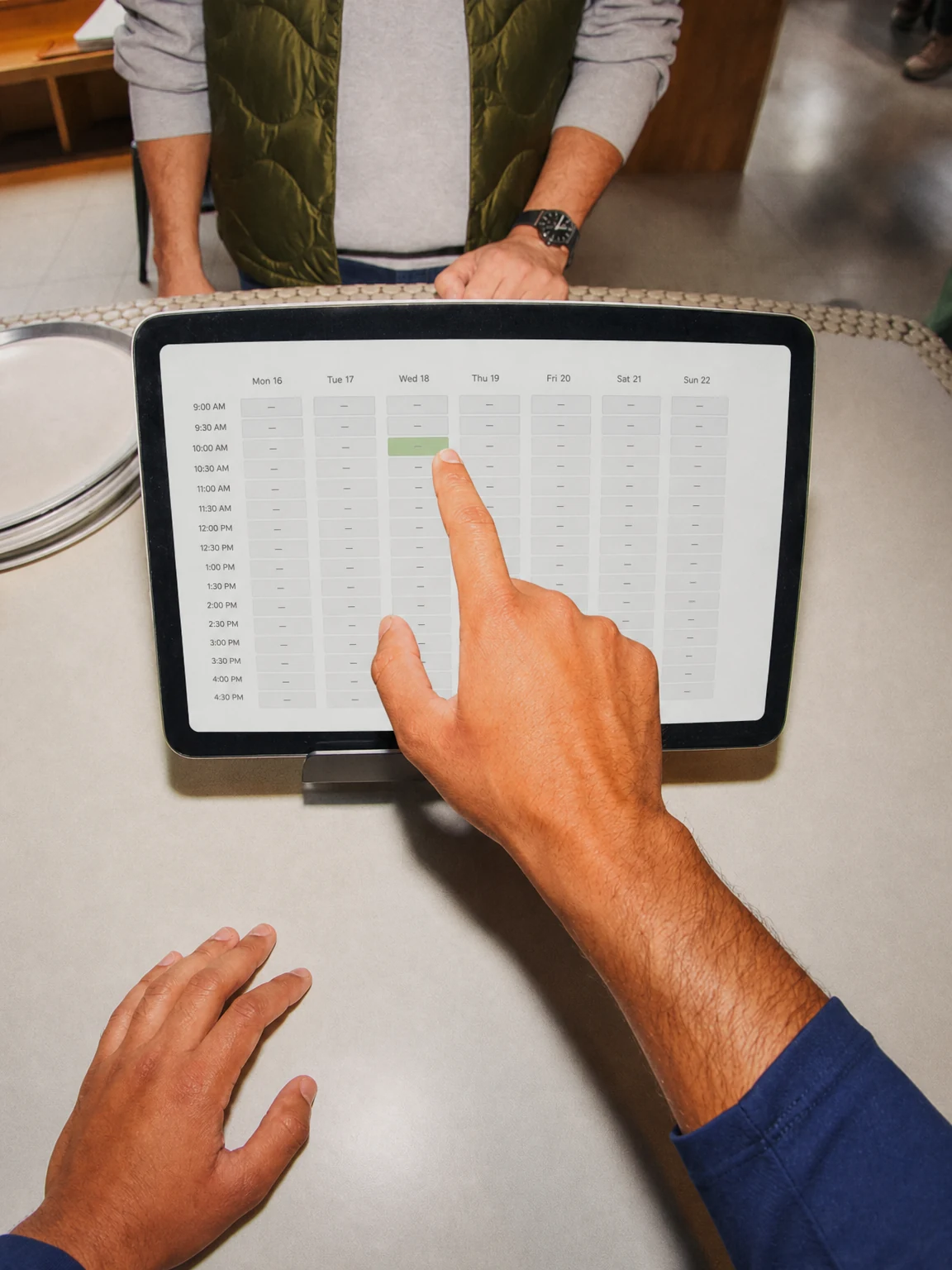
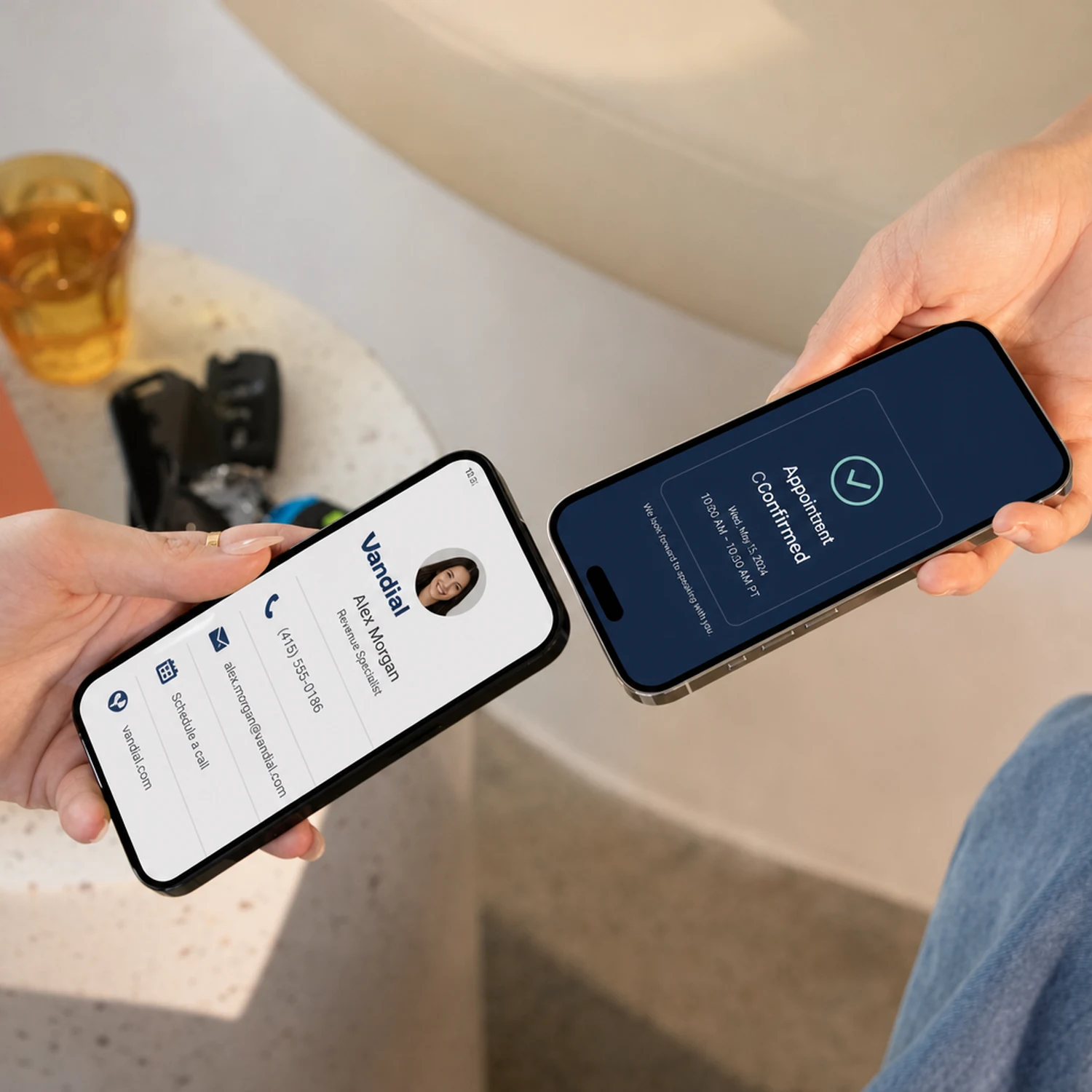
Google, Outlook, Apple, Exchange, CalDAV. An AI receptionist that emails you a summary has built a nicer voicemail; this one creates the appointment and texts the caller.
Get in touchSee what it costs…and a lot more besides
- Warm transfersWarm transfersAnnounced — who is calling and why, before you take the line.
- Spam never billedSpam never billedRobocalls are spotted, zero-rated, and never become a customer.
- A number per sourceA number per sourceVan, yard sign, Google listing — see which line brings the work.
- Team & on-callTeam & on-callTries you, then a second number, then whoever is on call.
- Run it by textRun it by textReply to a text to move a job, block a morning, clear a day.
- Clear a day, everyone toldClear a day, everyone toldCall off a wet Tuesday; every customer is told and re-offered.
- Never invents an answerNever invents an answerNo price or slot it was not given. It takes a message instead.
- Any trade, no codeAny trade, no codeGoal, questions and guardrails are settings, not a rebuild.
Comparing against a human answering service instead?
That is a different question with a different answer, and it has its own page: the locksmith answering service, with a full locksmith call played second by second.
Locksmith: locksmith answering serviceTrades that answer the phone the same way
The same archetype, which is what the product actually branches on. Every trade has one of these pages.
HVAC contractorsplumberselectriciansgarage door companiesauto repair shopstowing companiesAll trades ›Tools for the next step in your business
Qualify the inquiry
Capture the service, service details and timing. Use your booking rules to decide the next step and when a person should help.
Keep the booking moving
Offer times from your connected calendar, handle rescheduling and send confirmation so interested clients leave with a clear next step.
Welcome the next visit
Follow up with past inquiries and returning clients. Keep the context from the previous conversation and make the next visit easier to arrange.
Explore the questions behind better bookings
Discover what Vandial can do for you
See how an AI agent can help your business qualify inquiries and book the next step.
FAQ
What does it ask on a lockout that a generic agent does not?
Whether anyone or an animal is inside the vehicle or property, whether the caller can demonstrate they are entitled to entry, and what the lock or the vehicle actually is. The first is a safety rule, the second is a liability rule, the third decides which van goes.
Will it quote to open a lock?
It states your call out fee and your rate. It will not give a total for a specific job from a description, and it says why on the call.
Does it work at 3am?
That is when most of it works. There are no staffed hours, and your after hours rate is a setting it states rather than something a caller has to be surprised by later.
Can it reach me when it needs to?
It tries you first, each leg accepted by pressing 1 so a phone that is off cannot silently absorb the call, and whoever accepts hears a one line brief before being connected.
What does it cost?
Vandial’s paid plans start with Standard at $150 a month for 1,000 AI conversations, Pro at $350 for 2,000, and custom Enterprise plans. Contact us to discuss your workflow and setup; free trials and self-service testing are not available. Standard includes one AI channel, Pro three and Enterprise five. Additional AI conversations cost $0.40 each on paid plans. Voice minutes, phone numbers, paid messaging and implementation are quoted separately. See the pricing page for the conversation definition and plan details.
“People in a panic won't talk to a machine.”
People in a panic will talk to anything that answers. What loses this call is the fourth ring and the voicemail beep, because the next locksmith is one tap away in the same search results. It never claims to be a person, and it gets to the useful questions faster than a sympathetic human would.
“Quoting is impossible in this trade.”
Which is why it does not. Call out fee and hourly rate, both of them yours, and an explicit statement that the job is priced when the lock is seen. That is more honest than most of what gets said on locksmith phone calls today, and it is a setting rather than a decision the software makes.
“I need to know it will handle a child locked in a car properly.”
It is the one thing on this page that is not a preference. Every vehicle lockout is asked, and a yes stops the booking flow, tells the caller to ring emergency services, and alerts you. Nothing about that behaviour is left to the model to decide in the moment.